

FlawlessLashes is a small, content-driven eCommerce business where publishing speed and SEO efficiency matter, but resources are limited. Like many small teams, internal linking often slowed publishing rather than supporting it.
This case study shows how FlawlessLashes used draft-level internal linking automation to publish faster while keeping content SEO-ready from day one.
Company overview
Company: FlawlessLashes
Industry: Beauty & eCommerce
Team size: Lean content and marketing team
Primary channel: SEO-driven blog and educational content
FlawlessLashes uses content to educate customers, support product discovery, and drive organic traffic. As content production increased, maintaining consistent internal linking without slowing down publishing became a growing challenge.
The problem: internal linking disrupted publishing flow
Before automation, FlawlessLashes followed a fragmented workflow:
- Writers produced drafts without internal links
- SEO review happened late in the process
- Internal linking required manual site searches
- Articles went through multiple revision cycles
Internal linking itself was not complex — but it consistently delayed publishing. Writers had to wait for SEO feedback, and SEO specialists spent time on repetitive mechanical work instead of strategy.
For a small team, this friction added up quickly.
Why FlawlessLashes needed draft-level internal linking
FlawlessLashes wanted to change when internal linking happened.
The goal was to:
- Find internal links while writing, not after
- Publish articles already aligned with site structure
- Reduce back-and-forth between writers and SEO
- Eliminate post-publish “SEO cleanup”
This led the team to adopt LinkSigma’s Draft-to-Site Links Builder.
Solution: Draft-to-site links builder with LinkSigma
Instead of scanning the live site manually, writers pasted draft content directly into LinkSigma.
The Draft-to-site links builder analyzes the text and identifies phrases that should link to existing pages across the site.
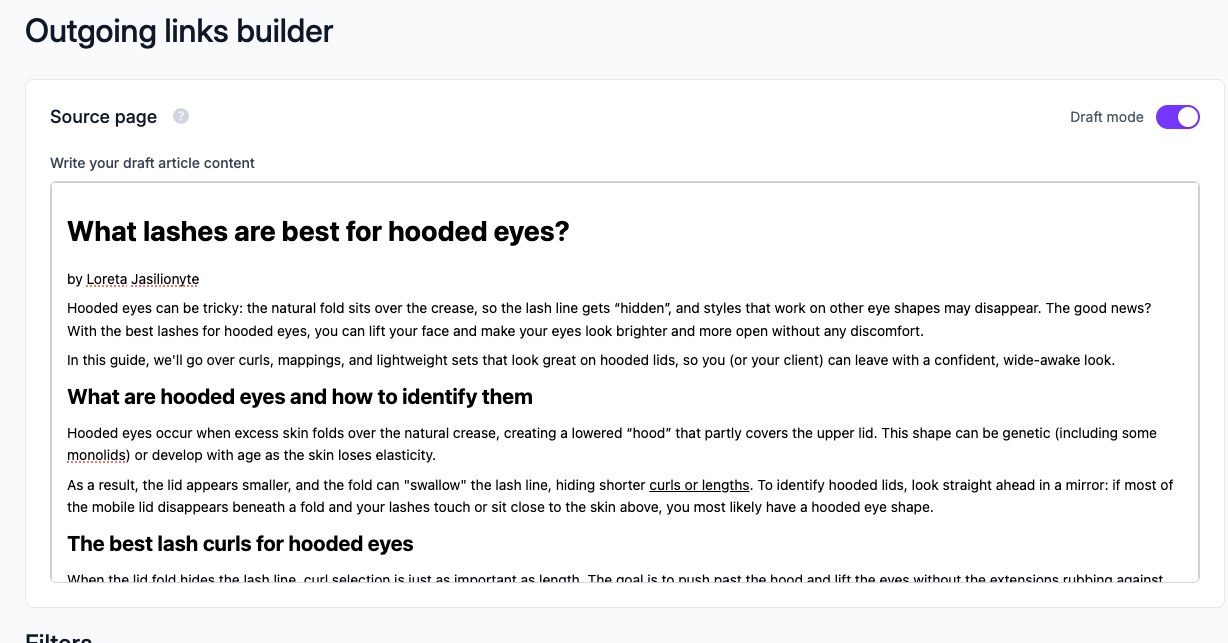
This shifted internal linking upstream into the writing process itself.
Finding internal links while still writing
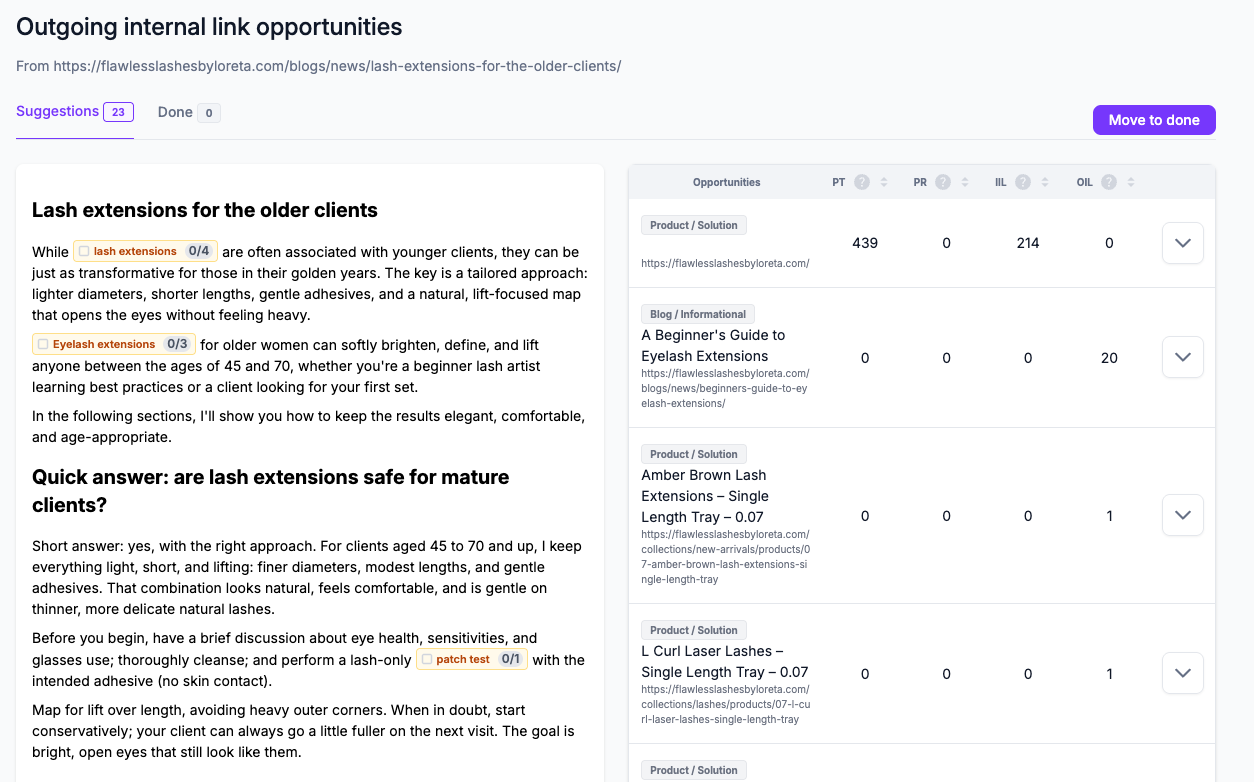
With LinkSigma, internal linking became part of drafting.
Writers could:
- Instantly see which phrases should be linked
- Discover relevant existing articles, categories, or product pages
- Apply links before submitting drafts for review
Articles were no longer written in isolation from the rest of the website.
Publishing with internal links already baked in
Once internal links were added at the draft stage, publishing became significantly smoother.
Key workflow changes:
- No separate internal linking phase
- No SEO “hold” before publishing
- Fewer revisions and approvals
Articles moved from draft to live in one continuous flow.
Removing SEO bottlenecks for a small team
For FlawlessLashes, SEO and content responsibilities often overlap. There is no dedicated SEO team reviewing every article.
Draft-level internal linking allowed:
- Writers to handle most internal linking independently
- SEO to focus on validation instead of execution
- Fewer interruptions and coordination delays
Internal linking stopped being a blocking dependency.
Results: smoother publishing and fewer revisions
After adopting LinkSigma, FlawlessLashes experienced:
- Faster article turnaround
- Fewer post-publish updates
- Less coordination overhead
- More consistent internal linking across new content
Publishing became predictable and repeatable.
Why FlawlessLashes continues using LinkSigma
FlawlessLashes didn’t change how it writes content, it changed when internal linking happens.
By moving internal linking into the drafting phase, the team removed friction, saved time, and ensured every article goes live structurally aligned with the rest of the site.