

VSight empowers industrial teams with augmented reality-driven remote assistance and digital work instructions. They enable experts to guide on-site technicians in real time and streamline complex operational workflows.
As VSight’s content and documentation grew, internal linking became a bottleneck that led to excessive editorial and SEO resources. This case study shows how VSight used internal linking automation to cut time spent on linking tasks while improving consistency and relevance across its site.
Company overview
Company: VSight
Industry: B2B software/SaaS
Company size: Mid-sized
Primary challenge: Manual internal linking at scale
VSight produces a large volume of content across product pages, documentation, and informational blog articles. As the site grew, internal linking became increasingly time-consuming and inconsistent, relying heavily on manual research and spreadsheets.
The problem: internal linking didn’t scale with content growth
Before automation, VSight’s internal linking workflow had several structural issues:
- Editors manually searched the site for linking opportunities
- Anchor text selection was based on intuition, not search data
- Existing links were often duplicated or placed on low-value pages
- No centralized visibility into internal links, anchors, or page categories
Each new article required separate internal link research. Updating older content meant repeating the same process. As output increased, time spent on linking grew linearly.
The SEO team estimated that internal linking tasks consumed a disproportionate share of editorial and SEO resources, with limited confidence that links were optimally placed.
Why VSight looked for an internal linking automation tool
VSight needed a system that could:
- Identify internal linking opportunities automatically
- Recommend anchors based on actual search and ranking data
- Reduce manual research and spreadsheet work
- Fit into existing CMS and editorial workflows
- Provide visibility across all internal links in one place
The goal was not to replace editorial judgment, but to remove repetitive mechanical work.
Implementing LinkSigma
VSight adopted LinkSigma to automate both incoming and outgoing internal linking workflows.
The implementation focused on three core areas:
- Automating link opportunity discovery
- Standardizing anchor text selection using data
- Centralizing internal linking insights in a single dashboard
Incoming links builder: finding the best pages to link from
For priority pages, VSight used LinkSigma’s Incoming Links Builder to identify the most relevant internal pages that should link to a target page.
Instead of manually searching the site, the tool analyzed crawled content and surfaced pages with strong topical relevance.
Key features used:
- Excluding pages that already contained links
- AI-driven page categorization to avoid irrelevant sources
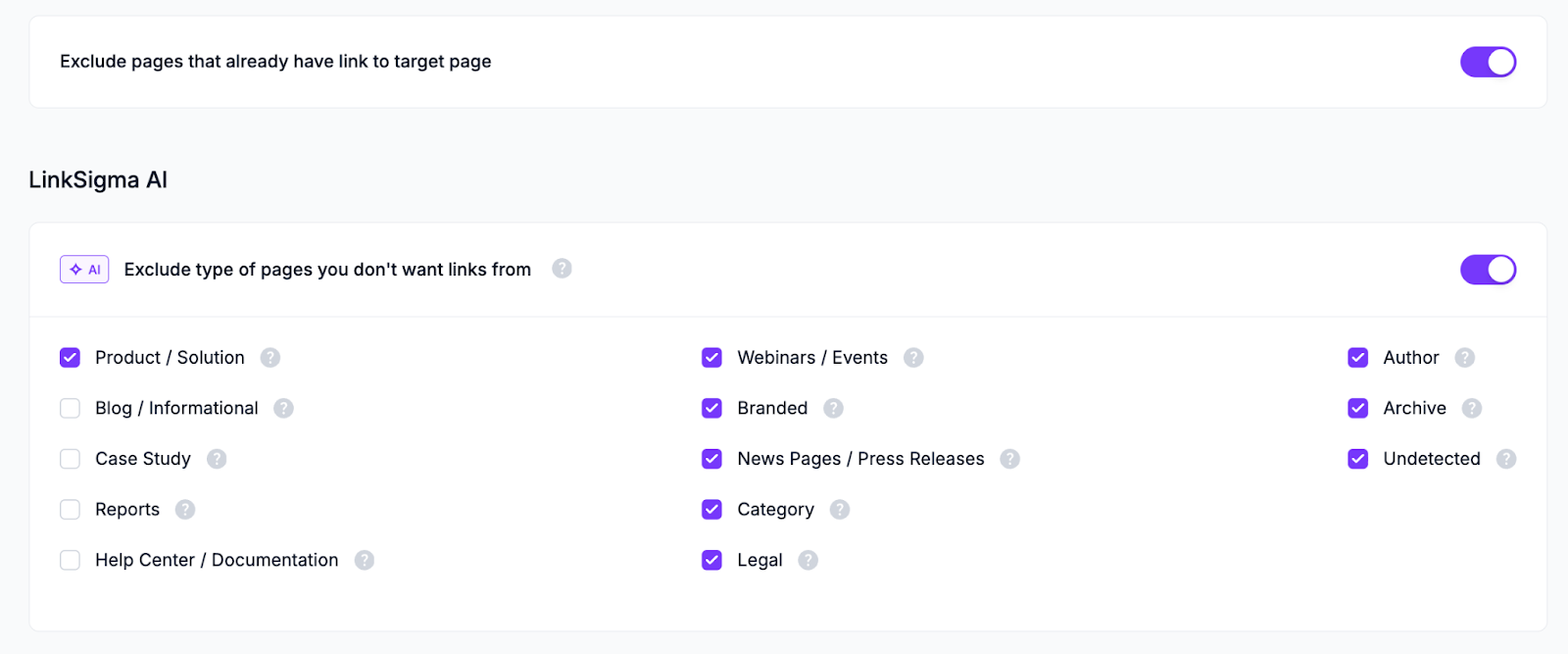
This reduced hours of manual review to a short validation step.
Smart anchors based on search data
Anchor text selection was a recurring bottleneck. Editors previously guessed which anchors to use or defaulted to partial exact matches.
LinkSigma replaced this with Smart Anchors, by using ranking, search data and AI where necessary.
This allowed VSight to:
- Align internal anchors with search demand
- Avoid over-optimization and repetition
- Maintain consistency across multiple articles
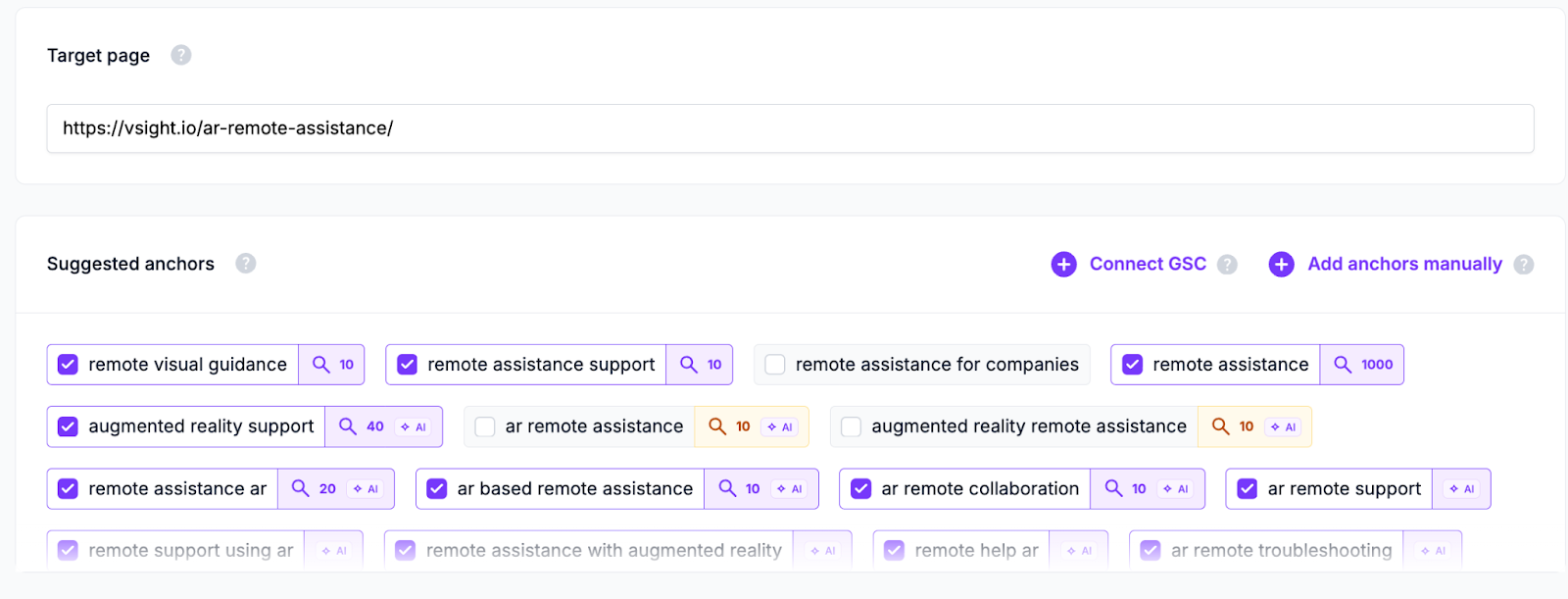
Editors could still edit anchors manually, but no longer had to start from scratch.
Outgoing links builder: linking draft or new content in seconds
For new articles, VSight relied on the Outgoing Links Builder.
The workflow:
- Paste or scan new content
- Automatically detect potential anchor phrases
- Receive recommended internal destinations
- Apply filters to exclude unwanted page types
This replaced manual internal searches entirely.
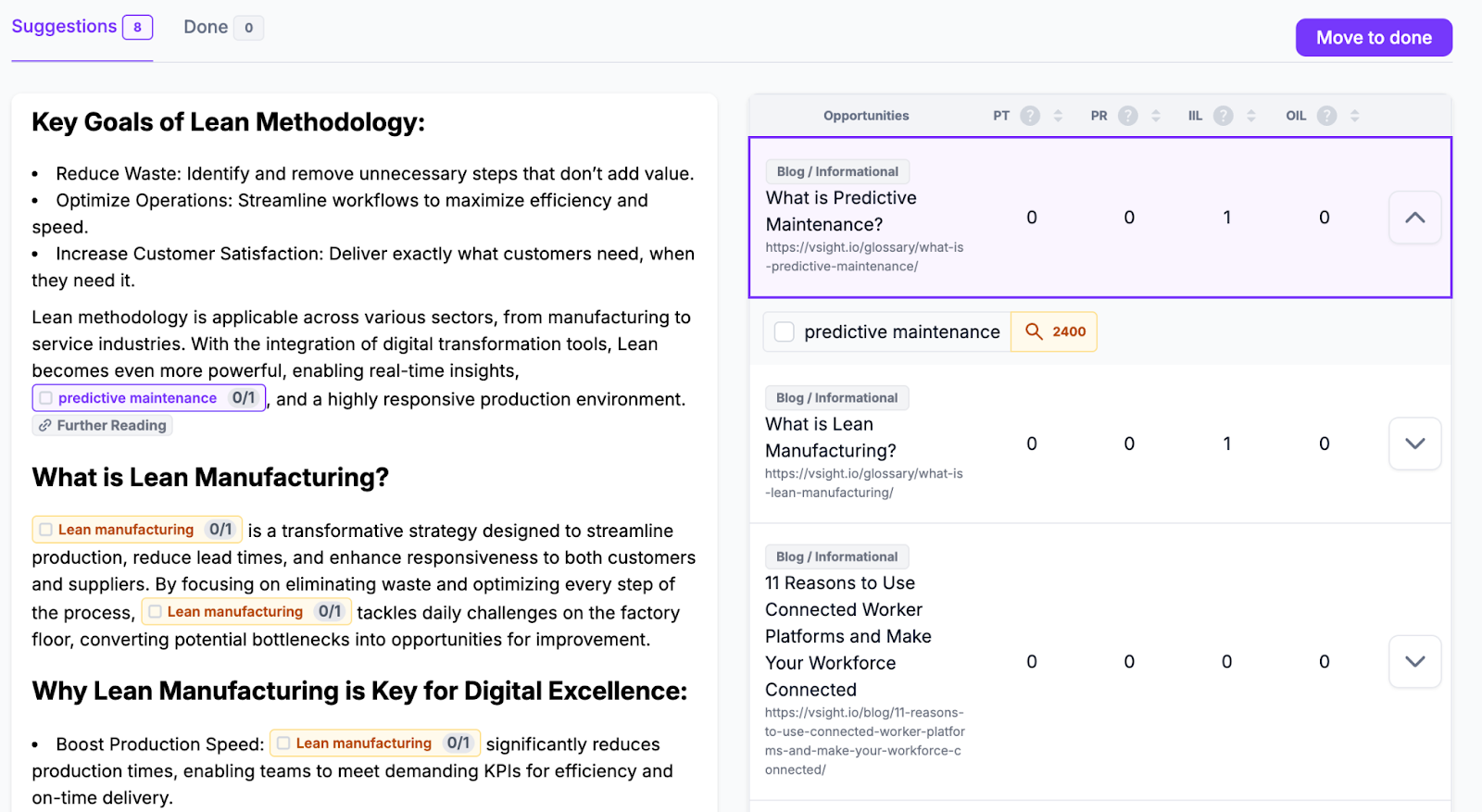
The result was faster publishing without sacrificing internal linking quality.
Intelligent crawling and page categorization
LinkSigma’s crawling approach focused on main content only, ignoring headers, footers, and boilerplate sections.
This mattered because:
- Links were suggested from contextually relevant content only
- Category assignments were more accurate
- Low-value or irrelevant pages were excluded by default
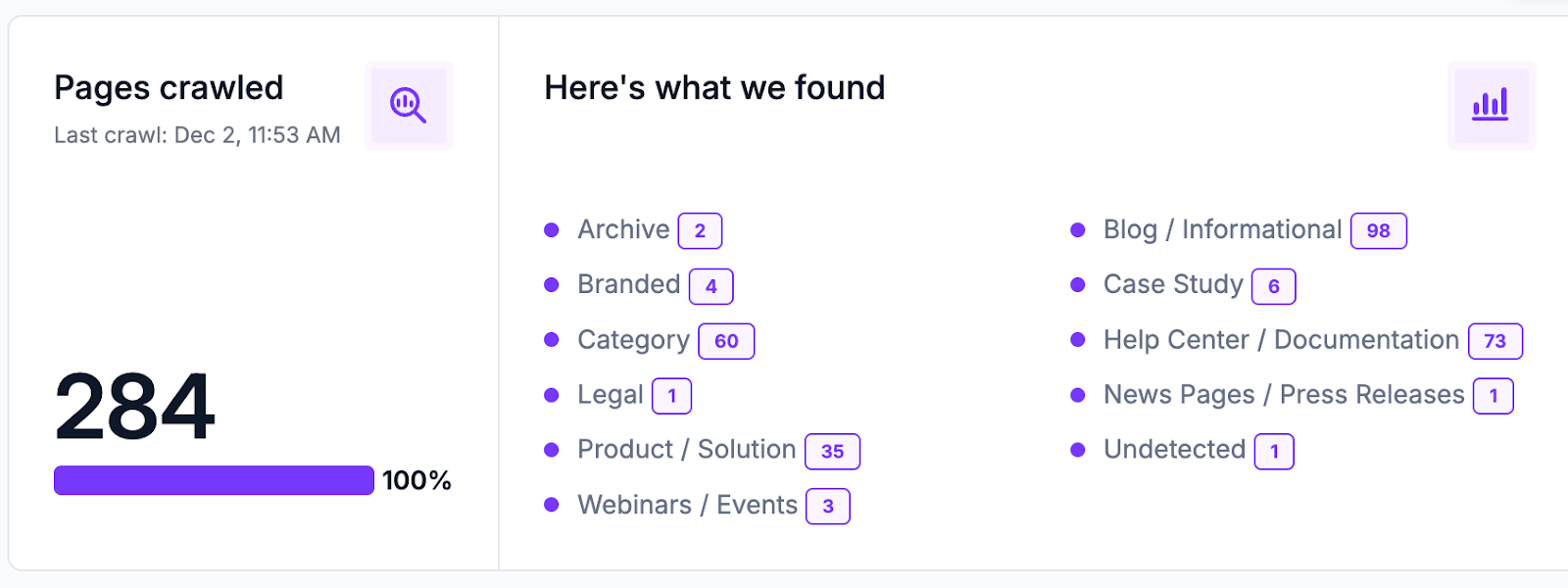
VSight used AI-based categorization to group pages and control where links could originate.
Centralized visibility with the dashboard
Previously, VSight had no single place to review internal linking performance.
With LinkSigma’s dashboard, the team gained:
- A full list of crawled internal pages
- Anchor usage tracking
- Internal and external link counts per page
- Performance metrics tied to Google Search Console
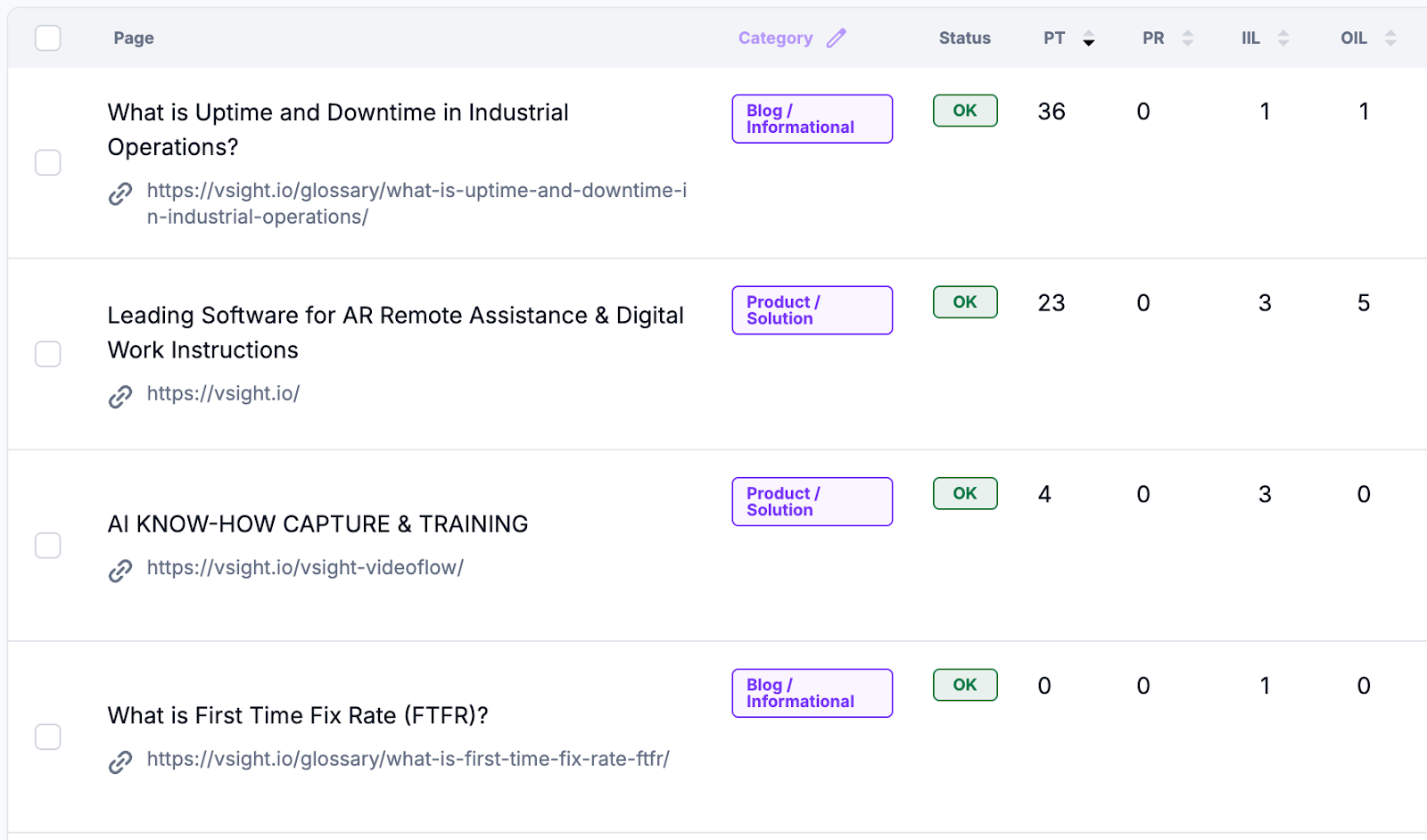
This enabled regular audits without manual data aggregation.
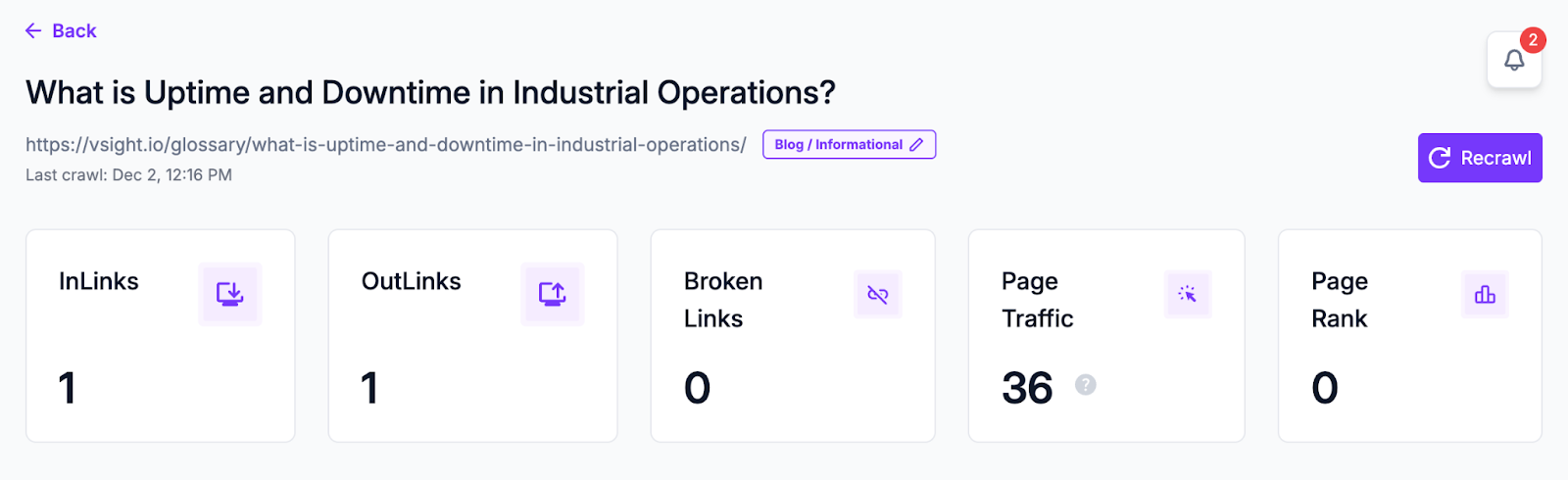
Results: measurable time savings
After adopting LinkSigma, VSight reported:
- Significant reduction in time spent per article on internal linking
- No more manual searches and spreadsheets
- Faster updates to existing content
- More consistent internal link structures across the site
Internal linking tasks shifted from research-heavy work to quick review and approval.The SEO team was able to reallocate time toward strategy, content planning, and analysis instead of repetitive execution.
Why VSight continues using LinkSigma
VSight did not adopt automation to remove human oversight. The value came from removing mechanical effort while preserving editorial control.
LinkSigma became a supporting system that:
- Scales with content volume
- Reduces operational friction
- Improves consistency across teams
For VSight, internal linking stopped being a bottleneck and became a repeatable, low-effort process.